
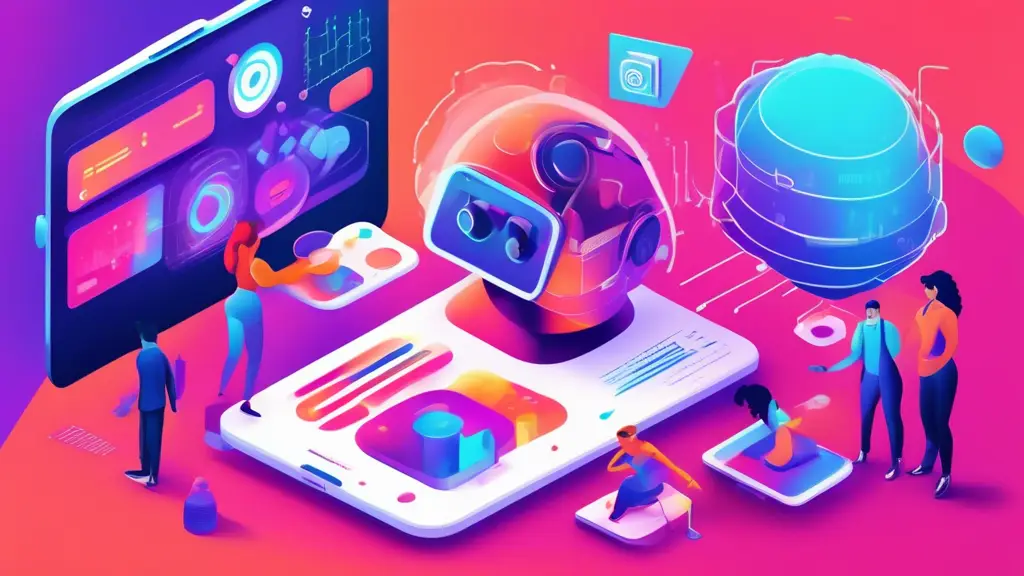
In the fast-evolving digital landscape, the realm of content marketing is constantly reshaping itself, driven by a wave of cutting-edge technologies and shifting consumer behaviors. The future of content marketing is an intriguing tapestry woven with innovative threads of Artificial Intelligence, Machine Learning, Augmented Reality, Virtual Reality, and more. Let’s dive into the core trends setting the stage for tomorrow’s content strategies.
Artificial Intelligence (AI) and Machine Learning (ML) are at the forefront of this transformation, enabling marketers to create more intelligent, personalized content than ever before. These technologies can analyze vast amounts of data swiftly, uncovering insights about audience preferences and behaviors that are then used to craft tailor-fit content. Imagine AI-powered tools that generate engaging blog posts or social media updates based on trending topics and user interests—they are no longer a thing of science fiction but a reality that’s here to stay.
Meanwhile, Augmented Reality (AR) and Virtual Reality (VR) are revolutionizing how audiences engage with content. AR allows for an interactive experience, overlaying digital elements in the real world, while VR offers an immersive journey into entirely virtual realms. These technologies can bring products and narratives to life, offering unprecedented levels of interaction and engagement that keep viewers hooked and coming back for more.
The rise of data analytics and personalization is another cornerstone of future content marketing strategies. By harnessing the power of data, marketers can not only track campaign performance but also understand their audience on a granular level. This paves the way for highly targeted content strategies that resonate deeply with specific audience segments, enhancing both reach and impact.
In terms of content formats, video content and live streaming are gaining massive traction. Today’s consumers crave visual and immediate experiences, making video an indispensable tool for marketers. From TikTok short clips to detailed YouTube tutorials, video content caters to a broad spectrum of interests and is ideally suited for storytelling and brand building.
Podcasts and audio content are also on the rise, offering a convenient way for brands to reach audiences during commutes, workouts, or as they unwind. The spoken word creates a personal connection, giving voice to brands and making their message more relatable and memorable.
Social media algorithms and platforms play a pivotal role in determining content reach and interaction. With each platform’s algorithm prioritizing different types of content, brands must continuously adapt their strategies to stay visible in their followers’ feeds. Understanding these algorithms and leveraging them effectively means increased engagement and stronger audience connections.
As we look forward, these trends highlight the dynamic nature of content marketing. The integration of emerging technologies and evolving content formats promises an exciting future where strategic, data-driven, and highly engaging content will become the norm rather than the exception.
Emerging Technologies Shaping Content Marketing
Role of Artificial Intelligence and Machine Learning in Content Creation
Artificial Intelligence (AI) and Machine Learning (ML) are no longer just buzzwords—they are transforming how content is produced and consumed. AI and ML can analyze vast amounts of data to understand trends, customer preferences, and even sentiment. They help create content that is not only relevant but also highly personalized.
Think of AI as your smart assistant. It can write product descriptions, generate blog posts, and even craft social media updates. Tools like Jasper and Copy.ai are leading examples of AI in content creation. These tools can analyze your brand’s voice and style, then mimic it to generate text that sounds like it was written by a human. This saves time and allows human creators to focus on more strategic tasks.
Machine Learning takes this a step further by continuously improving the quality of content over time. For example, if ML algorithms notice that certain blog posts perform better due to specific keywords or formats, they can suggest adjustments to improve future content. This self-learning ability helps marketers to stay ahead of trends and audience needs.
The Impact of Augmented Reality (AR) and Virtual Reality (VR) on Audience Engagement
Welcome to the next frontier of immersive experiences—Augmented Reality (AR) and Virtual Reality (VR). These technologies are making waves in content marketing, providing ways to engage audiences like never before.
AR overlays digital information onto the real world. Imagine pointing your phone at a store and seeing product reviews or virtual fitting rooms. Companies like Snapchat and Facebook Spark AR have been leveraging AR to create interactive content that captures attention and enhances user experiences.
On the other hand, VR offers a fully immersive experience by placing users inside a completely digital environment. Brands use VR for virtual tours, product demonstrations, and even interactive storytelling. For example, IKEA uses VR to let customers design their kitchens and visualize the end-product in 3D before making a purchase. This not only aids in decision-making but also boosts engagement and satisfaction.
Both AR and VR create emotional and memorable experiences, making them powerful tools for marketers looking to connect deeply with their audience.
Use of Data Analytics and Personalization for Targeted Content Strategies
Data is the new gold, and when mined correctly, it can provide invaluable insights for content marketing strategies. Data analytics helps marketers understand their audience’s behavior, preferences, and needs. Tools like Google Analytics and Hotjar track user interactions on websites and gather useful metrics like page views, time spent on page, and click-through rates.
Personalization is the practice of tailoring content to individual users based on data insights. This could be as simple as addressing a user by their name in emails or as complex as recommending products based on their past behaviors and preferences. Personalized content is proven to engage better, converting leads into loyal customers.
Let’s break this down: Suppose you run an online store. By using data analytics, you notice that customers from a certain demographic frequently buy eco-friendly products. With this insight, you can create blog posts, social media content, and email campaigns focused on eco-friendly products targeting that specific group, thereby increasing the likelihood of engagement and purchase.
Furthermore, software like HubSpot and Salesforce offer sophisticated data analytics and personalization features. These tools allow you to segment your audience, track their journey, and deliver targeted content at the right time.
In conclusion, emerging technologies like AI, AR, VR, and data analytics are not just adding new layers to content marketing—they are revolutionizing it. By understanding these technologies and effectively incorporating them into your strategies, you can create content that’s not only more engaging but also far more effective.
Evolving Content Formats and Distribution Channels
Growth of Video Content and Live Streaming Popularity
The digital age has significantly shifted how people consume information, making video content a critical component of content marketing strategies. According to recent statistics, video content is set to represent over 80% of all web traffic by 2022, captivating audiences in ways text simply can’t. The visual and auditory stimulation provided by videos hooks viewers, making it easier to convey complex messages and evoke emotions.
But why is video content growing so fast? Firstly, it’s exceptionally versatile. Businesses can use it for product demos, customer testimonials, tutorials, and behind-the-scenes glimpses, among other formats. Secondly, videos are highly shareable. Social media platforms prioritize video content, making it easier for brands to reach a broader audience quickly.
Live streaming is another booming trend, offering a raw, authentic peek into real-time events. Platforms like Facebook, Instagram, and YouTube have made it easy for brands to go live, engage in Q&A sessions, or even host virtual events. The interactive nature of live streaming builds trust and fosters community by allowing immediate feedback and engagement from viewers. These real-time interactions create a stronger connection between brands and their audiences.
Rise of Podcasts and Audio Content in Marketing Strategies
In the fast-paced digital landscape, podcasts have emerged as an influential content format. The on-the-go nature of podcasts fits seamlessly into the lives of busy consumers, offering educational or entertaining content that can be consumed while commuting, exercising, or multitasking.
Podcasts offer a unique advantage: they provide a platform for deep, engaging conversations on niche topics. This level of in-depth discussion is often unachievable through other mediums like social media posts or short videos. Brands that leverage podcasts can position themselves as authorities in their fields, building a dedicated and loyal listener base.
Moreover, the barrier to entry for podcasting is relatively low, requiring only basic recording equipment and software to get started. Hosting guests or experts in your industry can add invaluable insights and credibility to your content while potentially extending your reach through cross-promotion. As smart speakers and voice-activated assistants become more prevalent, the convenience and demand for audio content will only continue to rise.
Influence of Social Media Algorithms and Platforms on Content Reach and Interaction
Navigating the labyrinth of social media algorithms has become an essential skill for content marketers aiming to maximize their reach and engagement. Social media platforms like Facebook, Instagram, Twitter, and TikTok use sophisticated algorithms to determine what content appears in users’ feeds, prioritizing posts that they believe will be most engaging.
These algorithms consider various factors such as post type, user interaction history, and relevancy. For instance, Instagram’s algorithm places a heavy emphasis on engagement metrics like comments, shares, and likes. Content that achieves higher interaction rates is more likely to be pushed to the top of news feeds.
Understanding these subtle mechanics can help brands optimize their posts for maximum exposure. For example, utilizing interactive elements like polls, quizzes, or stickers in Instagram Stories can boost viewer engagement and, consequently, visibility. On TikTok, where trends and viral challenges reign supreme, brands need to be agile and quick to participate in or initiate trending content.
Social media platforms are continuously evolving to keep users engaged, frequently introducing new features and tools. These changes can significantly impact how content is distributed and consumed. Staying updated on these developments is crucial for marketers who want to remain at the forefront of content innovation.
In conclusion, the content landscape is rapidly transforming, driven by advances in technology and shifts in consumer behavior. Videos, podcasts, and strategic social media use are becoming non-negotiable in the marketer’s toolkit. By staying attuned to these trends and continuously adapting strategies, brands can ensure they not only keep pace but also set the standard in content marketing excellence.
As we gaze into the crystal ball of content marketing’s future, it’s clear that we’re standing on the precipice of thrilling technological advancements and evolving content strategies. The march of Artificial Intelligence (AI) and Machine Learning (ML) is revolutionizing content creation by making it more efficient and tailored. These technologies are not just clever buzzwords; they allow marketers to analyze vast amounts of data, predict trends, and create highly personalized content that resonates with individual audience segments. This means that content will become even more relevant and valuable to consumers, engendering deeper connections and loyalty.
Similarly, the infusion of Augmented Reality (AR) and Virtual Reality (VR) is setting the stage for unprecedented levels of audience engagement. Imagine being able to not just read about a product but experience it virtually as if it’s in your hands. This immersion can transform how customers interact with brands, from trying out products in AR-driven fitting rooms to embarking on VR-fueled brand adventures. These technologies are revolutionizing how we perceive and participate in content, making experiences more interactive and memorable.
Furthermore, the strategic use of data analytics and personalization is carving out a new paradigm for targeted content approaches. By harnessing the power of analytics, marketers can decode consumer behavior patterns and preferences with remarkable precision. This knowledge enables the crafting of bespoke content strategies that zero in on what the audience truly desires, thereby enhancing engagement and conversions.
The evolution doesn’t stop with technology; it extends into the realm of content formats and distribution channels. Video content and live streaming continue to surge, supported by the millennial and Gen Z affinity for dynamic, visual storytelling. These mediums captivate attention more effectively than traditional forms, facilitating a more immediate and intimate connection with audiences. Concurrently, podcasts and audio content are booming, capitalizing on the convenience they offer to on-the-go listeners. This audio renaissance signals a shift toward content that fits seamlessly into the multitasking lifestyles of today’s consumers.
Social media platforms, with their ever-changing algorithms, remain powerful gatekeepers of content distribution. They dictate not just the reach but also how content is consumed and interacted with, making it imperative for marketers to stay agile and adaptive. By tailoring content to align with these algorithmic trends, brands can maximize their visibility and impact on social media.
In summary, the future of content marketing promises to be an exciting journey marked by innovative technologies and sophisticated strategies. AI, AR, VR, and data analytics are not just enhancing the efficiency and effectiveness of content creation but are also making content more engaging and personalized. Meanwhile, the rise of varied content formats and smarter distribution channels ensures that marketers can capture and retain audience attention in more creative ways. As we move forward, the key to success will lie in embracing these advancements and staying ahead of the curve, ensuring that content is not just consumed but celebrated.


