
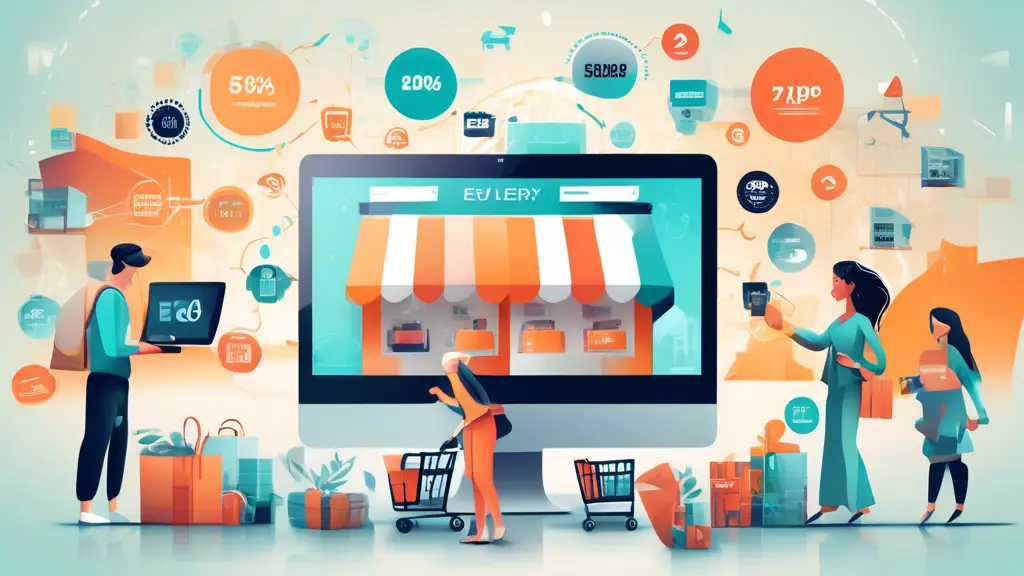
E-commerce, that bustling digital marketplace where everything from spare parts to haute couture can be found with a few clicks, hasn’t always been the seamless experience we know today. It’s come a long way since its humble beginnings. The early days of online shopping were like the Wild West—exciting, uncharted, and often unpredictable. Imagine dial-up internet and clunky websites that took ages to load; that was the landscape pioneers navigated as they traced the origins and initial adoption of e-commerce.
As technology advanced, so did the world of e-commerce. Every leap in innovation—from the rise of high-speed internet to secure payment gateways—has sculpted a more efficient and user-friendly shopping experience. Some key milestones, like the introduction of SSL certificates for secure online transactions and the advent of mobile commerce, were game changers that revolutionized the industry.
Today’s e-commerce scene is a dynamic ecosystem, constantly adapting to modern trends and consumer behaviors. For instance, the shift towards mobile commerce means more people are shopping on their smartphones. Why? Because it’s convenient and fits seamlessly into our on-the-go lifestyles. And let’s not forget AI and machine learning, which have taken personalization to new heights, making customer experiences more tailored and engaging.
In this era of growing environmental awareness, even sustainability has found its way into e-commerce. Businesses are increasingly adopting eco-friendly practices to cater to conscientious consumers. Looking ahead, future innovations like augmented reality shopping and drone delivery systems promise to push the boundaries even further, making us wonder—what’s next in the exciting journey of e-commerce evolution?
The Historical Transformation of E-commerce
Early Days of Online Shopping: Tracing the Origins and Initial Adoption
The dawn of e-commerce can be traced back to the late 20th century. It all began in 1979 when Michael Aldrich invented online shopping by connecting a modified television to a transaction processing computer via a telephone line. It was a revolutionary idea, but the concept of buying goods and services electronically took a while to catch on.
During the early 1990s, with the World Wide Web gaining traction, a few companies started exploring online transactions. However, it wasn’t until 1994 that the first secure online purchase was made – a Sting CD bought by a friend of the American cryptographer Phil Zimmerman using encryption technology previously used by the military. This was a pivotal moment because it assured consumers that their personal information could be safely transmitted over the internet.
Despite this initial success, early e-commerce faced numerous challenges. Internet connections were slow, websites were basic and cumbersome, and very few people had ever shopped online before. However, technological advancements soon began to break down these barriers, making online shopping more accessible and user-friendly.
Technological Innovations: How Advancements Have Revolutionized E-commerce
So, how did e-commerce transform from its humble beginnings into the colossal industry it is today? The answer lies in constant technological innovation. Let’s break it down:
- Internet Accessibility: The rise of broadband internet in the early 2000s allowed faster data transmission and more reliable connections. This made browsing online stores much smoother and more enjoyable.
- User Interface Improvements: As websites evolved, they became more sophisticated and user-friendly. Features like shopping carts, search functions, and secure payment gateways made the process more streamlined and trustworthy.
- Mobile Technology: The introduction of smartphones and mobile internet capabilities opened a new frontier for e-commerce. Shoppers could now browse and buy products on-the-go, making online shopping more convenient than ever.
- Big Data and Analytics: By analyzing vast amounts of consumer data, companies can understand customer behaviors and preferences. This allows for personalized recommendations and targeted marketing, enhancing the overall shopping experience.
- Artificial Intelligence: AI has brought significant improvements in customer service. Chatbots, virtual assistants, and automated responses can handle inquiries and complaints round-the-clock, ensuring a high level of customer support.
- Secure Payment Systems: Innovations such as one-click payments, digital wallets, and cryptocurrency have made online transactions faster, easier, and safer.
Key Milestones: Significant Developments That Shaped the Industry
Let’s now take a look at some of the major milestones that have fundamentally changed the e-commerce landscape:
- Amazon’s Launch (1995): Founded by Jeff Bezos, Amazon started as an online bookstore. It wasn’t long before it expanded into various product categories, becoming the behemoth we know today. Amazon’s business model set new standards for e-commerce, particularly with its focus on customer satisfaction and fast delivery.
- eBay’s Introduction (1995): eBay started as an online auction site and quickly became a popular platform for buying and selling a wide array of items. Its unique model of connecting buyers directly with sellers was groundbreaking.
- PayPal’s Evolution (2000): PayPal made online payments simpler and more secure. It facilitated transactions not only for eBay but for numerous online merchants, contributing significantly to the growth of e-commerce.
- Rise of Alibaba (1999): Alibaba’s success, particularly in China, showcased the potential of e-commerce beyond Western markets. Its platforms, including Tmall and Taobao, have become crucial parts of the global e-commerce ecosystem.
- Social Commerce (2014): The integration of social media and e-commerce allowed companies to reach customers through platforms like Facebook, Instagram, and Pinterest. This blend of social interaction and easy purchasing has been a powerful driver of sales.
- COVID-19 Pandemic (2020): The global pandemic accelerated e-commerce growth like never before. With physical stores closed, consumers flocked to online shopping for everything from groceries to electronics. This surge forced businesses to innovate rapidly and adapt to meet the increasing demand.
From its humble beginnings to the high-tech industry it is today, e-commerce has come a long way. The journey has been marked by innovative breakthroughs, relentless pursuit of customer satisfaction, and adaptation to changing market conditions. These historical transformations have set the stage for the future of online shopping, which promises to be even more dynamic and exciting.
Modern Adaptations and Future Trends in E-commerce
Embracing Mobile Commerce: The Shift Towards Shopping on Mobile Devices
The landscape of e-commerce has dramatically shifted toward mobile commerce, often referred to as m-commerce. As smartphones become more ingrained in our daily lives, consumers increasingly prefer to shop using these devices. This shift is largely attributed to the rise of user-friendly mobile apps, and responsive web design that fit screens of all sizes, ensuring a seamless shopping experience.
One of the key drivers of m-commerce is convenience. Think about it: instead of being tethered to a desktop, buyers can now browse, compare, and purchase products from anywhere and at any time. In addition, mobile payment solutions like Apple Pay, Google Wallet, and Samsung Pay have simplified the checkout process, reducing friction and making it easier for consumers to finalize their purchases.
Moreover, mobile commerce isn’t just about individual shopping. Social commerce, where transactions take place directly on social media platforms like Instagram and Facebook, is gaining rapid traction. Businesses are leveraging these platforms’ vast reach to highlight products and drive sales directly from posts and ads.
Businesses must optimize their mobile interfaces for speed and usability. Slow load times and cumbersome navigation can be deal-breakers in m-commerce. Thus, investing in mobile optimization is crucial for remaining competitive in this evolving market.
AI and Machine Learning: Enhancing Personalization and Customer Experience
Artificial Intelligence (AI) and Machine Learning (ML) are revolutionizing e-commerce by providing hyper-personalized shopping experiences. These technologies analyze reams of data to predict consumer preferences, suggesting products that are more likely to interest individual users.
For example, AI algorithms track customer behavior—what products they view, what items they add to their cart, and their purchase history—to tailor recommendations accordingly. This ensures customers see products that resonate with their tastes, enhancing their shopping journey and increasing the likelihood of purchase.
Machine Learning is also pivotal in chatbots and virtual assistants. These AI-driven entities provide real-time customer support, answer queries, and even help with product selection. By doing so, they offer seamless assistance without the need for human intervention, making customer service more efficient.
Additionally, predictive analytics powered by AI help businesses manage inventory better. By predicting which products will be in demand, companies can avoid the pitfalls of overstocking or understocking. This leads to not just cost savings, but also ensures customers are more likely to find the products they want in stock.
Sustainability in E-commerce: The Rise of Eco-friendly Practices
Sustainability is no longer a buzzword; it’s a significant factor influencing consumer decisions and shaping the future of e-commerce. Modern consumers are increasingly eco-conscious and prefer to support businesses that take meaningful steps toward environmental protection.
This growing awareness has led to the rise of eco-friendly practices in e-commerce. Many companies are adopting sustainable packaging materials, such as biodegradable plastics and recycled paper, to minimize their environmental footprint. Shipping and logistics are also undergoing a green transformation, with carbon offset programs and electric delivery vehicles becoming more common.
Additionally, businesses are implementing ethical sourcing practices, ensuring that their products are made in environments that are safe for workers and kind to the Earth. This means better labor conditions, fair wages, and eco-friendly manufacturing processes.
E-commerce giants like Amazon have also jumped on the sustainability bandwagon. For instance, Amazon’s Climate Pledge aims to make the company net zero carbon by 2040. Smaller businesses are following suit, making sustainability a competitive differentiator.
As sustainability continues to gain importance, companies that fail to adopt eco-friendly practices may find themselves losing customers to more ethically conscious competitors. Therefore, integrating sustainability into the business model isn’t just good for the planet; it’s also good for business.
Future Innovations: Predicting the Next Big Trends in E-commerce Technologies
The future of e-commerce looks incredibly promising, with several innovations on the horizon poised to revolutionize how we shop online. One such trend is the increased use of Augmented Reality (AR) and Virtual Reality (VR). AR and VR allow customers to visualize products in their own space before making a purchase, thereby reducing the uncertainty that comes with online shopping. Imagine seeing how a new couch looks in your living room through your phone camera—this technology is making that possible.
Blockchain technology is another game-changer. Known mostly for its association with cryptocurrencies, blockchain offers secure transactions and can revolutionize supply chain transparency. This ensures that customers receive genuine products and can track every step of the product’s journey from manufacture to delivery.
Voice commerce is set to grow as well. Smart speakers like Amazon’s Alexa and Google Home are increasingly being used to place orders, providing a hands-free shopping experience. As voice recognition technology improves, we can expect voice commerce to become more intuitive and user-friendly.
Another exciting development is the potential rise of drone deliveries. Though still in the experimental phase for most businesses, drones promise quicker and more efficient delivery solutions, especially for urgent and last-mile deliveries. This could significantly change logistics and customer expectations regarding delivery times.
In summary, the e-commerce landscape continues to evolve, driven by mobile commerce, AI-driven personalization, sustainable practices, and groundbreaking future technologies. Businesses that adapt to these trends will not only thrive but also set new standards for the industry.
In conclusion, the journey of e-commerce from its rudimentary beginnings to its current sophisticated state exemplifies a remarkable evolution driven by relentless technological advancements and shifting consumer behaviors. The early days of online shopping, marked by hesitant adoption and rudimentary systems, set the stage for what would become a fundamental revolution in how we buy and sell goods. Critical technological innovations, such as secure transaction protocols and digital payment systems, played a pivotal role in pushing e-commerce into the mainstream. These advancements not only made online shopping possible but also gradually built the trust needed for widespread acceptance.
As we navigated through key milestones, including the dot-com boom, the rise of giant marketplaces like Amazon and Alibaba, and the proliferation of broadband internet, each development added new layers of convenience and complexity to the ecosystem. These milestones weren’t just technological leaps; they reflected broader societal shifts towards a more connected and digital world.
Today, e-commerce is defined by modern adaptations that cater to an increasingly mobile and discerning consumer base. Mobile commerce, or m-commerce, has become a dominant force, driven by the ubiquity of smartphones and the demand for shopping on-the-go. This shift underscores the importance of responsive design and mobile-optimized experiences in capturing and retaining consumer interest.
Artificial intelligence (AI) and machine learning have further transformed the landscape by enabling high levels of personalization and enhancing the overall customer experience. Through predictive algorithms and personalized recommendations, retailers can offer a more tailored and engaging shopping journey. These technologies not only increase sales but also foster loyalty by making customers feel understood and valued.
Sustainability has emerged as another critical consideration in modern e-commerce. Driven by a growing awareness of environmental issues, both consumers and businesses are prioritizing eco-friendly practices. This includes sustainable packaging, energy-efficient operations, and promoting conscious consumerism. As such, sustainability is no longer just a buzzword but a decisive factor in shaping purchasing decisions.
Looking ahead, the future of e-commerce promises even more exciting innovations. Emerging technologies like augmented reality (AR), virtual reality (VR), and blockchain are poised to further revolutionize how we shop online. Imagine trying on clothes in a virtual fitting room or ensuring transparency and security through blockchain-based transactions. These advancements will not only enhance functionality but also offer new, immersive experiences that bridge the gap between digital and physical shopping.
In summary, e-commerce has come a long way from its humble beginnings, continually adapting and evolving to meet the changing demands of technology and consumers. As we stand on the cusp of new innovations, the future holds limitless possibilities for this dynamic and ever-evolving industry.


