

In today’s fast-paced business world, the concept of automation has become synonymous with competitive advantage. Automation, in its simplest terms, refers to the use of technology and systems to perform tasks without human intervention. But don’t let its simplicity fool you. The scope of automation stretches across various industries, from manufacturing and logistics to healthcare and finance. It’s not just about robots on an assembly line; it’s about intelligent systems and software that can handle complex tasks, analyze data, and even make decisions.
Staying competitive in this digital age means embracing automation to stay ahead of the curve. The importance of integrating automation into business processes can’t be overstated. Companies that leverage automation effectively can enhance efficiency, reduce costs, and improve the quality of their products and services. This technological leap ensures that they don’t just survive but thrive against competitors who are lagging behind.
Current trends in automation technology are pushing the envelope even further. Artificial intelligence (AI) and machine learning (ML) are no longer futuristic concepts; they are now integral parts of how businesses operate. Robotics Process Automation (RPA) enables software robots to handle repetitive tasks, freeing up human workers to focus on more strategic initiatives. The Internet of Things (IoT) connects devices and systems, facilitating real-time data exchange and decision-making. Cloud computing offers scalable resources and enhances collaborative efforts across the globe.
Understanding automation’s landscape and embracing its potential is crucial. Whether it’s by streamlining processes to boost production rates or reducing operational costs through smarter resource management, automation provides a definite edge. Those who invest in automated quality control systems can deliver superior products consistently, while scalable solutions allow businesses to adapt quickly to market demands. To outpace the competition, integrating automation isn’t just a strategy—it’s a necessity.
Introduction to Automation in Business
Definition and scope of automation in various industries
Automation in business refers to the use of technology to perform tasks that were traditionally done by humans. This involves utilizing software, machinery, and other systems to carry out processes automatically, thereby reducing manual labor and increasing efficiency. Industries from manufacturing to healthcare, finance, and even retail are leveraging automation to enhance their operations. For instance, in manufacturing, robots are used to assemble products swiftly. In healthcare, automation helps manage patient records efficiently. Even in retail, automated checkout systems speed up the purchase process. Essentially, automation can be applied just about anywhere repetitive tasks are found.
Importance of staying competitive with automation
The significance of staying competitive with automation cannot be overstated. As sectors move towards digital transformation, companies that fail to adopt automation risk falling behind. Think of it like a relay race—businesses that implement automation are passing the baton quickly, while those that don’t are lagging behind, slowing down their team. Automation allows businesses to reduce costs, improve service quality, and operate more efficiently, making them formidable competitors in their industries. Those who don’t adapt may find it challenging to keep up with the pace of change and could lose market share to more tech-savvy competitors.
Overview of current trends in automation technology
The world of automation is constantly evolving, and keeping up with trends can provide significant advantages. A few key current trends include:
- Artificial Intelligence (AI) and Machine Learning (ML): These technologies are central to automation, enabling systems to learn from data and make decisions without human intervention. AI and ML are used in various applications such as predictive maintenance in factories and personalized customer service in retail.
- Internet of Things (IoT): IoT involves connecting physical devices to the internet, allowing them to communicate and share data. In industries like manufacturing, IoT devices can monitor equipment performance and detect issues before they become problems.
- Robotic Process Automation (RPA): RPA focuses on automating mundane, rule-based administrative tasks, such as data entry and invoice processing. This frees up human workers to focus on more strategic, higher-value activities.
- Cloud Computing: The cloud allows businesses to access powerful automation tools and large-scale computing resources on-demand, without the need for expensive on-premises infrastructure.
- 5G Technology: With its high speeds and low latency, 5G technology enhances the performance of automated systems, enabling real-time data processing and communication across connected devices.
These trends highlight how automation is not static; it’s a dynamic and integral aspect of modern business strategies. Adopting the latest technologies can give businesses an edge, helping them outpace competitors and thrive in an increasingly automated world.
Key Benefits of Automation for Outpacing the Competition
Efficiency and Productivity Enhancements
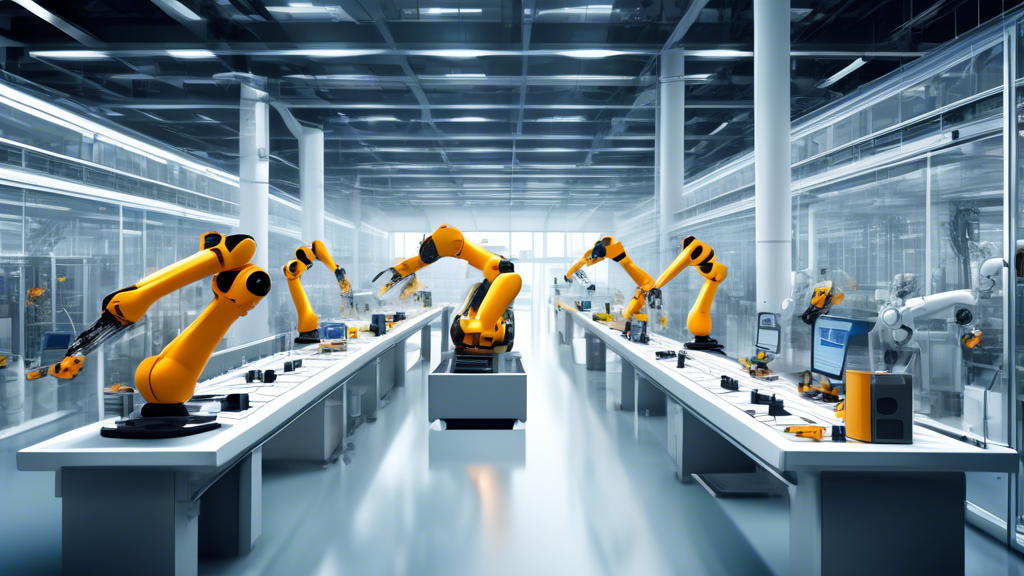
One of the most compelling advantages of automation is its ability to significantly boost both efficiency and productivity. Imagine a factory where robots assemble products with precision and speed. Unlike humans, these machines don’t need breaks, sleep, or vacations. Automation streamlines repetitive tasks, reducing the time and effort needed to complete them. This means that more products or services can be generated in less time, contributing to higher output rates.
Consider a service-based industry, like customer support, where chatbots and automated response systems handle a large portion of inquiries. This frees up human agents to tackle more complex issues, ensuring that more customers are helped in a shorter timeframe, thus improving overall customer satisfaction.
Moreover, automation minimizes human errors. For instance, a software application designed to handle data entry will never make a typo or forget to fill in a field. This not only boosts productivity but also enhances accuracy and efficiency in operations.
Cost Reduction and Resource Management
In today’s competitive business landscape, managing costs effectively can be the difference between success and failure. Automation plays a pivotal role in this area by helping businesses cut down on operational costs. For instance, robotics in manufacturing can perform tasks with fewer mistakes, reducing waste and the need for rework. This, in turn, lowers the cost of production.
Additionally, automation can lead to significant savings on labor costs. While there is an upfront investment in automated systems, they often pay for themselves quickly by decreasing the number of employees needed for repetitive tasks. This allows businesses to allocate resources more strategically, putting human talent to work in areas that require creativity and critical thinking.
Furthermore, automated systems can optimize the use of resources like energy and materials. For example, smart systems in facilities management can adjust lighting, heating, and cooling based on real-time usage patterns, thus reducing energy consumption and lowering utility bills.
Improved Quality Control
Quality control is vital for maintaining customer satisfaction and brand reputation. Automated systems are highly effective in ensuring consistent quality in products and services. For instance, in the automotive industry, automated inspection systems use cameras and sensors to detect flaws or defects in parts and assemblies. These systems are far more accurate than the human eye and can operate continuously without fatigue.
Automation also allows for real-time monitoring and adjustments. In pharmaceutical manufacturing, automated systems can monitor the conditions and ingredients involved in drug production, ensuring that each batch meets stringent quality standards. Any deviation can be addressed instantaneously, reducing the risk of defective products reaching the market.
Moreover, data collected from automated systems can be analyzed to identify trends and pinpoint areas for improvement. This continuous feedback loop helps businesses refine their processes, leading to even higher quality over time.
Scalability and Flexibility
One of the most significant advantages of automation is its ability to scale operations quickly and efficiently. Scalability refers to the capability of a business to grow and manage increased demand without compromising on performance. Automation systems can be easily scaled up or down based on production needs. For example, a cloud-based service can manage traffic spikes without crashing, thanks to automated load balancing and resource allocation.
Flexibility, on the other hand, is the ability to adapt to changing conditions and demands. Automated systems can be reprogrammed or adjusted with relative ease compared to retraining a human workforce. In the food industry, for example, an automated assembly line can switch from producing one type of snack to another with minimal downtime, simply by changing the software settings and reconfiguring machinery.
Automation also allows for rapid implementation of new technologies and processes. In a dynamic market, being able to quickly integrate innovations can give businesses a significant edge over competitors still reliant on outdated or inflexible systems. This adaptability ensures that companies can stay ahead of market trends and consumer expectations.
Clearly, the benefits of automation extend far beyond mere convenience. By enhancing efficiency, reducing costs, improving quality, and providing scalability and flexibility, automation equips businesses with the tools they need to outpace the competition. The future belongs to those who can harness these advantages effectively and strategically.
As we delve into the transformative potential of automation in business, it’s evident that leveraging this technology is no longer a luxury but a necessity for staying ahead of the competition. By redefining how tasks are executed across various industries, automation creates a landscape where efficiency, cost-effectiveness, and superior quality reign supreme.
Efficiency and productivity are greatly amplified through automation. By streamlining repetitive and time-consuming processes, businesses can boost their production rates significantly. This means less time is wasted on mundane tasks, freeing up human resources for more strategic and creative endeavors, ultimately fostering innovation.
Another pivotal benefit lies in cost reduction and resource management. Automation slashes operational costs by minimizing errors and reducing the need for manual labor. The precise allocation of resources ensures that materials, time, and capital are utilized optimally, fostering a leaner and more cost-effective operational model.
Moreover, the integration of automated systems has a profound impact on quality control. Automated processes ensure consistency and accuracy, significantly reducing the likelihood of defects and errors. This leads to higher customer satisfaction as the quality of products and services becomes more reliable and predictable.
Scalability and flexibility are yet another feather in the cap of automation. In today’s fast-paced business environment, the ability to swiftly adapt and scale operations can be a game-changer. Automation provides the framework to respond rapidly to market demands and fluctuations, ensuring that businesses can grow and evolve without the usual constraints.
In conclusion, the advantages of automation in outpacing the competition are clear and compelling. From enhancing efficiency and managing costs to improving quality and enabling scalability, automation equips businesses with the tools they need to thrive in an increasingly competitive landscape. The journey toward embracing automation may require an initial investment and a willingness to adapt, but the long-term benefits far outweigh the costs, making it an indispensable strategy for forward-thinking businesses.


